Top Permanent Lighting Installers in Alamo, TX
Also looking for Christmas lights? See Christmas Light Installers in Alamo, TX →
Permanent Lighting Installation in Alamo, TX
Permanent outdoor lighting fits the Rio Grande Valley's climate in Alamo for a reason that's almost the reverse of most of the country: this is one of the few places in the continental U.S. where freeze-thaw cycling, the thing that destroys fixtures and connectors most places, is barely a factor. The nearest full-record weather station, McAllen Miller International Airport about seven and a half miles northwest, logs 1991-2020 normal lows of 52.7 to 60.1 degrees across November through January, and the airport's all-time record low of 13 degrees was a single-night event back in January 1962, not an annual pattern. What actually works against hardware here is sustained heat and ultraviolet exposure — average highs near 90 degrees in October, a record high of 111 degrees on the books, and Gulf humidity layered on top of both. Seasonal strands built for a few outdoor weeks followed by storage in a dark tote are not built to survive months of direct subtropical sun every single year, which is why a box of consumer lights pulled out of a shed in Alamo each November is often already brittle and sun-faded before it ever goes up. September, the peak of Atlantic hurricane season regionally, is also the wettest month on average, so wind-driven rain is a real seasonal stress test too. A sealed aluminum channel holding the diodes back from direct weather handles Alamo's actual range — intense heat, UV and humidity, occasional hurricane-season wind — better than anything re-hung by hand twice a year. Even the city's own history leans agricultural and outdoor rather than industrial — Alamo grew as a shipping point for vegetables and citrus through the 1940s and 1950s — and a climate that has always demanded durable, sun-tolerant materials outdoors is exactly the kind of environment permanent fixtures were engineered for in the first place.
Cost comes down to measurable things rather than a number anyone can quote sight unseen: total linear footage of roofline and trim, the brand and fixture family chosen, and how many corners and transitions the roof geometry forces the channel to navigate. Those variables swing across Alamo's mix of housing — an older single-story home in the city's original in-town core near Highway 83 is a simpler, shorter run than a larger home in one of the newer residential developments filling in toward the city's edges as the McAllen-Edinburg-Mission metro grows. Homeowners who have paid for seasonal installation and takedown year after year, especially the city's many winter residents who are only in town part of the year and don't want to manage a ladder job on a short seasonal visit, sometimes find the math shifts once that twice-a-year labor stops being a recurring cost — though exactly where that line falls depends entirely on the property and system chosen, and there's no flat figure that applies evenly across every house in Alamo. A free quote from an installer who has actually measured your roofline is the only way to see real numbers for your specific property. Get more than one quote, and confirm each one covers the same scope, since a cheaper-looking number quietly covering less roofline isn't actually the better price once the full job is compared apples to apples.
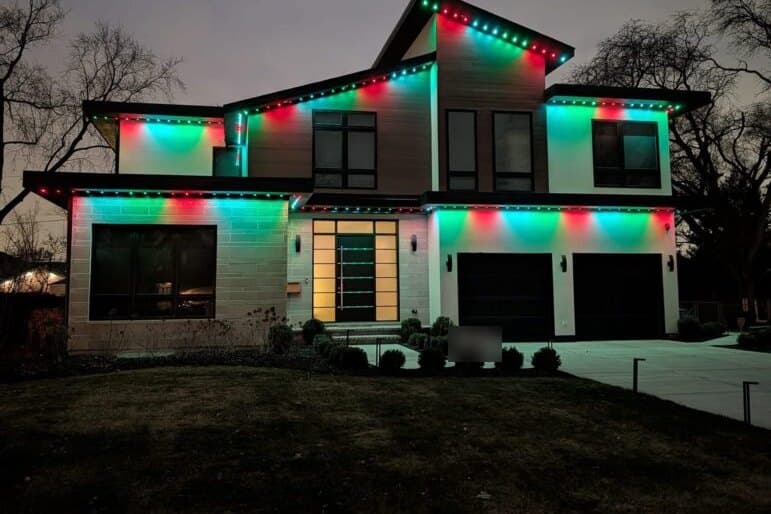
The part homeowners tend to underrate is what a permanent system does for the other eleven months. App control means the same channel that runs a full holiday display in December can hold a plain warm white for everyday curb appeal the rest of the year, then switch for whatever the calendar calls for — orange for Halloween, red and green through the holidays, a patriotic scheme for the Fourth of July, or a steady neutral tone the rest of the time. That flexibility has a particular edge in a city with Alamo's documented seasonal population pattern: Winter Texans who arrive every November and leave every spring can come back to a system already set up and controllable from an app, rather than negotiating a seasonal installer's schedule around a short visit. It's also a fair question to ask directly during a walkthrough: how visible is the channel in daylight, what color does the extrusion come in, and can it be matched to a home's trim. In a Valley town where many homes face the street with little landscaping to hide hardware behind, daytime appearance often ends up mattering as much as what the system does once it's dark, and a system that defaults back to one clean look the moment a holiday ends is simpler to live with year-round. A household near the Santa Ana National Wildlife Refuge south of town, which draws birders from across the country for roughly 397 documented species, might just as easily key a seasonal scheme to the refuge's own visitor calendar as to a national holiday — the point of app control is that the same hardware supports whatever the household actually cares about, without anyone back on a ladder to change it.
Installation on a typical Alamo home runs about a day once the walkthrough and measurement are done, though the specifics shift depending on the property. On older single-story homes in the original in-town core, ladder setup is quick and the channel run tends to follow a straightforward line along the fascia. On larger homes in newer residential areas toward the city's edges, more rooflines, corners and transitions mean the channel has to be planned carefully before the crew arrives to avoid stretching the job into a second day. Power drop location, transformer placement, and how the controller reaches a home's wifi network all get settled during the same walkthrough — a controller mounted somewhere the signal is weak turns a good system into a frustrating one almost immediately after the crew leaves. Because there's no narrow seasonal window the way there is for holiday-only installation, and because Alamo's winters are mild enough that outdoor work rarely gets rained out by cold, installers have real flexibility on scheduling; the practical limits are daylight hours and avoiding the heaviest stretch of hurricane season, which is part of why fall through early spring tends to be a comfortable stretch of the year to get a system mounted on a Valley home.
The permanent lighting brands you'll run into around Alamo include Jellyfish Lighting, Trimlight, EverLights, Gemstone Lights and Oelo. They differ in fixture profile, channel design, app behavior, how many individually addressable zones a single run supports, and how cleanly the controller ties into a home network, so which brand a given installer actually carries is a fair opening question rather than a detail to sort out after a deposit is paid. Ask which systems an installer is trained on and how long they've been mounting that particular brand, since the quality of the mounting job matters at least as much as which hardware ends up on the fascia — and in a climate this hot and sun-exposed, a poorly sealed connection fails faster than it would somewhere milder. Warranty coverage and support terms vary by brand and by installer, so get them in writing instead of assuming one company's terms apply to every system on the market. It's also worth asking what happens if a single diode fails several years out, and whether replacement fixtures for that exact channel profile are still available by then — a permanent system is a decade-scale purchase, and serviceability deserves real attention up front rather than an afterthought.
Commercial permanent lighting has a particular appeal along Alamo's U.S. Highway 83 corridor and among the packing and distribution operations tied to the Valley's long-running vegetable and citrus shipping economy: the fixtures never have to come down and go back up around a harvest schedule or a retail season. Businesses along the highway can run a full holiday display and then a subdued architectural accent the rest of the year from the same installed hardware, without rescheduling a seasonal crew around whatever else is already happening in November. The manufactured-home parks and RV resorts that fill with seasonal Winter Texan residents each year are candidates for the same approach on their clubhouses and common areas, trading an install-and-remove cycle for occasional fixture replacement instead of a full seasonal teardown. There's a safety angle too: a seasonal display on a commercial building or a park's common building means putting someone on a lift twice a year, sometimes during a stretch of hurricane-season wind or Valley summer heat; a permanent system moves that exposure to one planned day the crew picks for itself instead of one the calendar forces on them. Property managers juggling several sites along the same corridor also get a simpler annual maintenance calendar out of the switch — one system to check before the season rather than a full teardown-and-rebuild on every property every November, which matters when the same business district is also coordinating with packing operations running on the Valley's own harvest calendar and can't dedicate a crew to lighting for weeks at a stretch.
Homeowners and business or property owners in Alamo can request a free quote through Lights Local and compare installers working with different permanent lighting systems before committing to one. There's no single number that applies evenly across town — an older single-story home near the Highway 83 corridor and a larger home in one of the newer residential developments need different fixture counts and different channel runs, and an honest quote reflects that rather than flattening both into one figure. Getting two or three walkthroughs scheduled before the November arrival of the city's seasonal Winter Texan population and the holiday rush is the practical move, since installers tend to have more open scheduling earlier in the fall. Bring the same details to each visit — roof age and layout, number of stories, what you want lit beyond the roofline, and whether a homeowners association has design rules that apply — so the quotes you get back are actually comparable rather than three different jobs wearing three different numbers. It's also worth asking each installer directly how they'd handle a home in Alamo's older in-town core differently from one in a newer development toward the city's edges, since an installer who answers that specifically has actually thought about your roof rather than quoting from a generic template. Enter your ZIP code to see which permanent lighting installers serve your part of Alamo.
Alamo Neighborhoods and Areas Served
Our Alamo permanent lighting installers serve homeowners and businesses across this stretch of the Rio Grande Valley, from the city's older in-town core to its manufactured-home and RV communities and the surrounding Hidalgo County cities:
Browse all permanent lighting installers in Hidalgo County or use your ZIP code to find pros near you.
ZIP Codes Served
78516
Nearby Cities
Written by Matt Staton, founder of Strandr, the design software used by 1,700+ professional lighting contractors.
Lights Local checks the installers it lists. More about how Lights Local works → · What installation costs → · Buyer's guides →
Get a Free Quote
Verified pros in Alamo, TX — free, no obligation.
Tell us a few quick details and we'll match you with a local installer. Most pros respond within an hour.
Get Free QuoteFree, no obligation. A local pro will reach out directly.